
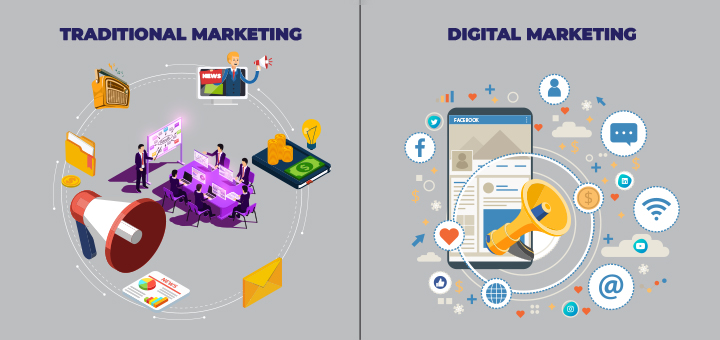
In today’s rapidly evolving marketplace, understanding the distinction between traditional marketing and digital marketing is crucial for businesses aiming to reach their target audience effectively. While traditional marketing methods have long been the norm, digital marketing has emerged as a powerful force, reshaping the way businesses reach and engage their target audience. In other words, traditional marketing encompasses conventional methods such as print advertisements, television commercials, and radio spots, which have been fundamental in reaching broad audiences for a long time. However, the rise of the internet and technological investments have given birth to digital marketing, a dynamic and versatile approach that leverages online platforms, social media, search engines, and email to engage with consumers in real time.
What is Marketing?
Marketing is the strategic process of creating, communicating, and delivering value to customers in a way that benefits the organization. At its core, marketing involves understanding consumer needs and creating strategies that provide value while driving engagement. In other words, effective marketing involves a deep understanding of consumer behavior, marketer trends, and the competitive landscape. However, in this modern age or digital age, digital marketing has become increasingly important, allowing businesses to engage with customers through social media, email, and search engines.
What is the Purpose of Marketing?
Marketing's very purpose is to create value for both businesses and customers by connecting products or services with the right audience. In other words, it serves as the catalyst for business growth, bridging the gap between organizations and their target customers. Marketers can develop products that resonate with their target audience by understanding customer needs, desires, and pain points. Another objective is also to generate revenue by creating awareness and interest in a brand’s offerings. It also plays a crucial role in differentiating a brand from its competitors by highlighting unique selling points and delivering a consistent message across all channels. In other words, the purpose of marketing extends beyond mere sales; it aims to create value for customers, educate them about products, and drive profitable customer action.
What are the Key Differences Between Traditional Marketing and Digital Marketing?
As mentioned earlier, both aim to reach consumers and promote products or services, they employ vastly different strategies and tactics.
Engagement and Interaction
Engagement and interactions are one of the pivotal differences between traditional marketing and digital marketing. In traditional marketing, engagement is often one-way, limited to passive consumption of content. In contrast, digital marketing excels at creating dynamic engagement and interaction. Through platforms like social media, email marketing, and interactive websites, digital marketing facilitates two-way communication, allowing businesses to respond to customer inquiries, participate in conversions, and gather actionable insights.
Detailed Analytics and Real-Time Data
Detailed analytics and real-time data are hallmarks of digital marketing, setting it apart from traditional marketing. Traditional marketing relies on broad metrics and indirect measurements, such as sales, figures, and market surveys, which can be slow to compile and often lack details. However, digital platforms provide granular insights into audience behavior, engagement, and campaign performance.
Limit
When comparing traditional marketing to digital marketing, understanding the inherent limitations of traditional methods is crucial. Geographic limitations and higher costs often constrain traditional marketing. However, digital marketing offers global reach and precise targeting capabilities, allowing marketers to reach specific audiences more effectively. In summary, there are limits to both traditional and digital marketing, and it is important to recognize these limitations in order to recognize these limitations in order to make-informed judgments regarding marketing methods.
Tracking
Traditional and digital marketing have limitations, but they differ in nature and scope. Digital platforms provide detailed analytics and real-time data that allow marketers to monitor the effectiveness of their strategies and make immediate adjustments as needed. Traditional marketing methods, such as print ads, television commercials, and radio spots, often face limitations in tracking effectiveness.
Cost
When comparing costs in traditional marketing versus digital marketing, significant differences emerge. Traditional marketing techniques like print ads, television commercials, and radio spots typically entail higher initial costs. Digital marketing typically offers greater cost-effectiveness by enabling businesses to strategically allocate their budgets through targeted advertising on platforms such as social media and search engines.
ROI
Return on Investment (ROI) is a key metric for evaluating the effectiveness of marketing campaigns. Traditional marketing methods typically involve significant upfront costs and limited tracking capabilities, making it difficult to assess their impact precisely. Digital marketing consistently shows a higher return on investment because of its cost-effectiveness and quantifiable results. This is because by tracking website traffic, conversions, and social media engagement, marketers can attribute specific results to their digital campaigns.
Audience Targeting
When it comes to audience targeting, digital marketing holds a clear advantage over traditional marketing. Traditional channels like print advertisements, TV commercials, and radio spots typically target a wide audience with less precision, making it challenging to focus on specific demographics or interests. On the other hand, digital marketing offers precise targeting capabilities, allowing marketers to reach specific demographics based on factors such as age, location, interests, and online behavior.
Two-way Communication
In marketing, two-way communication has become a crucial concept, especially compared to traditional marketing methods. While traditional marketing often involves a one-way communication model, digital marketing fosters interactive engagement between brands and their audience.
Speed of Execution
Speed of execution is a crucial factor when evaluating traditional vs. digital marketing. Brands can respond swiftly to market trends and consumer demands by launching digital marketing campaigns almost instantaneously. However, in traditional marketing, launching a campaign often involves lengthy processes like planning, production, and distribution. This may delay reaching the target audience.
Conclusion
Businesses must stay attuned to trends, consumer behavior, and technological advancements to craft campaigns that resonate and yield measurable results. While both marketing approaches have their merits, the choice between traditional marketing and digital marketing often depends on the specific goals, target audience, and resources of the business. In other words, by leveraging the right mix of channels and tactics, marketing becomes a powerful tool that drives sales and fosters lasting customer relationships, ensuring long-term growth and success in an ever-changing market.